
Toms River, NJ — July 29, 2026
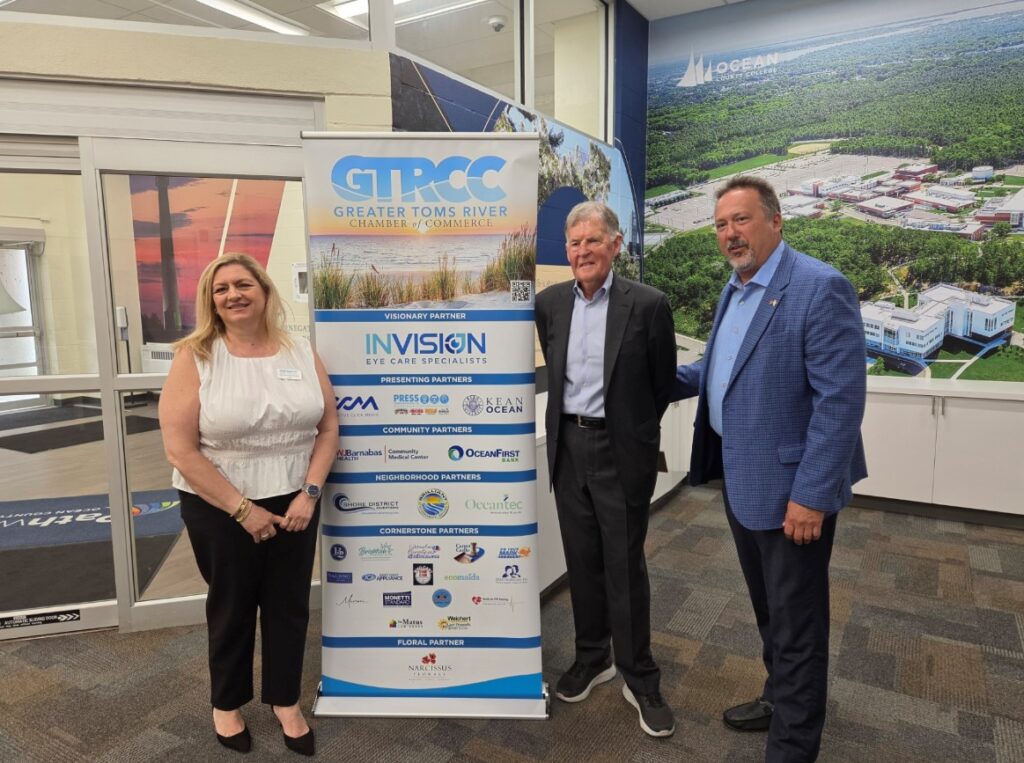
More than two dozen business leaders, nonprofit executives, educators, local officials, and entrepreneurs gathered in Toms River on Tuesday as the New Jersey Chamber of Commerce continued its statewide Business Town Hall series. The meeting, hosted by the Greater Toms River Chamber of Commerce, is one of eleven listening sessions designed to collect direct feedback from businesses before presenting recommendations to Governor Mikie Sherrill’s administration and the New Jersey Legislature.
Rather than offering prepared speeches, the meeting focused on one central question:
“What is preventing New Jersey businesses from growing?”
The answers were remarkably consistent.
New Jersey’s Business Climate Remains a Major Concern
Tom Bracken, President & CEO of the New Jersey Chamber of Commerce, opened the meeting by acknowledging that New Jersey has significant work ahead.
He noted that while the state possesses tremendous economic advantages, it continues to rank poorly in national business competitiveness and has earned a reputation as one of the least business-friendly states in the country. Bracken argued that rebuilding confidence among small and medium-sized businesses must become the foundation of the state’s new economic strategy.
The goal of the town halls is to identify recurring themes from hundreds of businesses statewide and present those findings directly to the Governor and legislators as priorities for action.
Business Owners Want More Than Conversations—They Want Action
Throughout the meeting, one message surfaced repeatedly:
Business owners appreciate being asked for input, but they now expect measurable results.
Participants expressed optimism that Governor Mikie Sherrill’s administration appears more willing to engage with the business community than previous administrations. However, many emphasized that outreach alone is not enough.
As Bracken summarized, the time has come to “stop talking and start doing.”
Major Concerns Raised by Business Owners
Regulations continue to overwhelm small businesses
Owners described years of expanding regulations, compliance requirements, permitting delays, paid leave mandates, and reporting requirements that disproportionately affect small employers.
Several attendees called for reinstating a “Red Tape” review commission that would allow government and business leaders to work together to eliminate outdated or duplicative regulations.
There are few incentives to expand
Restaurant owner Joe Palmisano, owner of Joe Bella’s Italian Kitchen and Four Seasons Diner, along with other employers questioned why New Jersey offers so little incentive for entrepreneurs willing to assume the financial risk of expanding operations and creating jobs.
Several suggested:
- Multi-year tax incentives
- Startup assistance
- Business expansion grants
- Loan forgiveness or refinancing options for businesses still carrying COVID-era debt
Phil Brilliant, owner of Brilliant Environmental Services, proposed that incentives should continue for several years rather than ending immediately after opening.
Workforce development remains a statewide challenge
Nearly every sector represented at the meeting discussed workforce issues.
Business owners cited difficulty finding qualified employees, while nonprofit leaders described the inability to compete with private-sector wages.
Educational institutions emphasized stronger partnerships between:
- Community colleges
- Vocational schools
- Employers
- Workforce development agencies
Participants stressed that preparing workers must happen alongside efforts to attract new businesses.
Ocean County faces unique challenges
Several speakers reminded state officials that economic policy cannot be “one-size-fits-all.” Ralph Wolff, owner of Jersey Coast Appliance, discussed Ocean County’s economy being shaped by:
- An aging population
- A large veteran community
- Seasonal tourism
- Joint Base McGuire-Dix-Lakehurst
- Long travel distances
- Limited public transportation
Michelle Zolezi, GM of Pure Soil and Environmental Affairs Executive at Earle, and Ocean County Commissioner, Jennifier Bacchione, urged the state to adopt regional economic strategies rather than assuming every county faces the same challenges.
Bracken agreed, explaining that the Chamber’s proposed statewide economic plan includes regional development strategies tailored to local needs.
Transportation affects economic growth
Healthcare providers, including Margaret Rizzo, Executive Director of JSAS Healthcare, as well as nonprofits, and employers identified inadequate public transportation as a significant obstacle.
Without reliable transportation:
- Employees struggle to reach work.
- Clients cannot access services.
- Businesses lose customers.
- Employers face greater hiring challenges.
The discussion highlighted the disparity between North Jersey’s extensive transit network and the limited transit options available throughout Ocean County.
Better Communication Was the Most Common Recommendation
Ironically, the strongest consensus wasn’t about taxes or regulations.
It was about communication.
Frank Monetti, managing partner at MonettiStandard, a CPA and advisory firm serving local, small business clients, said they simply don’t know what state programs exist or how to access them when recommending resources to business owners who need help.
Bridget Finlay, co owner of Brightside Branding, admitted that as a new business owner seeking answers and support within her first 2 years of opening her business, she had never heard of the New Jersey Business Action Center – despite its mission of helping businesses navigate permitting, regulations, financing, licensing, and government resources.
Bracken acknowledged this communication gap and committed to increasing awareness through chambers of commerce, webinars, and outreach efforts.
Resources Every Business Owner Should Know About
Several existing programs and organizations were discussed during the meeting, including:
- New Jersey Business Action Center (NJBAC)
- New Jersey Economic Development Authority (NJEDA)
- SCORE mentoring
- Small Business Development Centers (SBDC)
- Main Street America
- Downtown revitalization programs
- Community college workforce partnerships
While participants appreciated these resources, many argued that awareness remains low and application processes often take months to complete.
Several attendees also criticized grant programs that appear promising on paper but are difficult to access or require long waiting periods before funding is received.
Nonprofits Are Facing Growing Financial Pressure
Melissa “MJ” Torres, executive director for both the Toms River Business Improvement District (TRBID) and the Toms River Artist Community, expressed how nonprofit organizations described an increasingly difficult funding environment.
Concerns included:
- Reduced state support
- Declining donations
- Rising operating costs
- Increased demand for services
Many warned that when nonprofits close, local governments often inherit greater social service responsibilities.
Phil De Rita, owner of Personalized Communication Design Services, who works with a large non-profit client base, urged state leaders to recognize nonprofits as economic drivers that support jobs, downtown activity, tourism, and community development—not simply charitable organizations.
Small Businesses Continue Supporting Each Other
One of the most powerful moments came when Bridget Finlay described helping an 18-year-old entrepreneur create custom apparel to help him launch a landscaping company because traditional financing wasn’t available. Her observation resonated with many in the room:
“An 18-year-old can borrow over $100,000 for college, but can’t get a $5,000 loan to buy a lawn mower.”
The story reflected a broader sentiment that New Jersey’s entrepreneurial ecosystem often depends more on fellow business owners than on government support.
Holding the Administration Accountable
The Chamber made clear that these meetings are only the beginning.
After completing all eleven town halls, the organization plans to compile a statewide consensus report identifying recurring priorities and present those recommendations to Governor Sherrill and the Legislature as part of a broader statewide economic development plan.
Business owners should expect updates as those recommendations are finalized—and they should expect to hold elected officials accountable for acting on them.
Listening sessions create opportunity.
Legislative action creates results.
What Business Owners Can Do Next
The message at the conclusion of the meeting was simple: don’t wait for someone else to advocate on your behalf.
If New Jersey is going to become more competitive, business owners need to stay engaged long after the town halls conclude.
You can help by:
- Joining your local Chamber of Commerce and participating in legislative committees.
- Attending town halls, networking events, and advocacy meetings.
- Contacting your State Senator and Assembly members to explain how taxes, regulations, workforce shortages, and permitting delays affect your business.
- Sharing your experiences with organizations like the New Jersey Chamber of Commerce, the New Jersey Business Action Center, and your local economic development organizations.
- Encouraging other business owners to become active voices in shaping New Jersey’s economic future.
As Tom Bracken reminded attendees, legislators respond to the voices of voters. The more business owners speak with one voice, the harder it becomes to ignore the challenges facing New Jersey’s employers.

Lisa Mazzuca is owner of On Your Mark Designs, a digital marketing agency working with small business clients throughout Ocean and Monmouth Counties in New Jersey and beyond. Lisa has been a webmaster, content marketer, and SEO specialist since 2001. Mazzuca serves on the board of directors of the Greater Toms River Chamber of Commerce, and the local non-profit organization, A Need We Feed. Lisa is also the Vice President of the Ocean County Business Association, an industry exclusive business networking and referral group.